
How They Did IT:
Rady Children’s Improved Oracle Stability and Clinician Satisfaction
How They Did IT: Rady Children’s: Improved Oracle Stability and Clinician Satisfaction with Evidence-Basen Decision Making
By Thomas Charlton, CEO Goliath Technologies
In this How-They-Did-IT conversation, I sat down with Dr. Dieter Sumerauer, Associate Chief Health Information Officer at Rady Children’s Health in Orange County, to discuss how his team built the case for evidence-based IT decision-making, brought the right stakeholders together, and used data from Goliath to identify and fix the root causes of EHR performance problems their clinicians had been experiencing for years.
“What mattered was that none of our remediation actions were shots in the dark. We were not just upgrading infrastructure and hoping something improved. Each action was targeted and justified by the data. That is an important distinction, because IT budgets are finite and you cannot afford to make blanket investments hoping you hit the right issue.”
-Dieter Sumerauer
Hear more from Dr. Sumerauer about how Rady Children’s improved Oracle speed, reliability, and clinician experience in an upcoming webinar on March 26th. Register here.
Thomas Charlton:
Dr. Sumerauer, can you start by telling us a little about your background and your current role at Rady Children’s Health?
Dr. Dieter Sumerauer:
I’m the Associate Chief Health Information Officer at Rady Children’s Health in Orange County, which was previously known as CHOC, Children’s Hospital of Orange County. I joined about two years ago after serving as Medical Director of Ambulatory Healthcare Informatics for Pediatrics at University Hospitals of Cleveland. I started out in private practice, and early on I was doing things like wiring my own office and building wireless networks. That curiosity about the intersection of technology and care delivery has defined my career path ever since.
Thomas Charlton:
Let’s frame up what was happening at Rady’s before Goliath became part of the picture. What were you hearing from your clinicians, and what did your data actually tell you at the time?
Dr. Dieter Sumerauer:
The honest answer is that we didn’t know what we didn’t know. What we did know was that our frontline clinicians were complaining about long login times, overall system slowness, and the system not completing tasks, and ultimately crashing. And yet on the technical side, the prevailing view was that we were delivering good system stability and good speed to our end users.
There was a real disconnect. The people providing care on the front line were suffering, and the technical people were saying they couldn’t understand why, because everything looked fine on their end. The problem was that we had data on what we thought we were providing, but not on what was actually being delivered. It’s a bit like your internet service provider promising speeds up to 1 gigabit, while that may be the specification, it’s not necessarily what you’re getting at your device.
To borrow a phrase from Dr. Peter Pronovost at University Hospitals: “Waiting is suffering”. And I feel strongly that my real customer is the patient. Our clinicians are a conduit to that customer. When they are waiting for data, waiting for the system to respond, the patient is the one who suffers, waiting longer for answers, waiting longer for their physician to walk through the door. That is what was at stake.
Thomas Charlton:
How were you gathering feedback from clinicians before you had objective performance data? What channels were available to you, and where were the gaps?
Dr. Dieter Sumerauer:
We had multiple avenues via email, Microsoft Teams, the help desk, and a KLAS survey. We were working hard to collect as much input as we could. But you can only “round” so much, and there are only so many hours in the day. What you really need is the evidence to back up what your end users are telling you. Without that, you end up in a frustrating standoff: clinicians are saying something is wrong, and the technical team is pointing to infrastructure metrics that look healthy. Everyone is entrenched in what they think they know.
Thomas Charlton:
Your CHIO, Dr. Steve Martel had been advocating to bring Goliath in for two years before it finally happened. What was the tipping point? And when we eventually engaged together, you took a leadership role in pulling all the right parties into the room – Oracle, the internal IT team, the application team. Can you walk us through how that came together?
Dr. Dieter Sumerauer:
At the same time you and I connected, which happened when we met at the KLAS summit in Salt Lake City, I had already been in conversations with Oracle about why some of these performance issues were occurring. The responses we kept getting were, essentially, “it’s not on our end.” I was not convinced.
So, it became about relationship-building and getting the right people at the table. We were post-pandemic, and people were not coming on site. I pushed to get Oracle’s team to actually come in and experience what our frontline physicians were experiencing firsthand. And while we had them here, it made sense to also have Goliath present to test the connections and look at how the product was actually being delivered to end users.
The data turned out to be illuminating for everyone, our internal technical team and the Oracle team alike. We found problems on both sides, though more of the issues ultimately traced back to our environment. That was important. It moved the conversation from defensiveness to shared accountability.
Thomas Charlton:
Once the data was in hand, what specific actions came out of it? I’m thinking about the targeted investments that were made based on what Goliath surfaced.
Dr. Dieter Sumerauer:
The data was genuinely eye-opening. It showed us that we really did not know what we thought we did. We ended up replacing laptops at specific locations where the data showed slowdowns, devices that had exceeded their replacement lifecycle but had not been flagged through our normal processes. We increased bandwidth to affected sites. We replaced network switches that were limiting throughput. We also identified end-of-life servers in our server farm that were contributing to the problem.
What mattered was that none of these were shots in the dark. We were not just upgrading infrastructure and hoping something improved. Each action was targeted and justified by the data. That is an important distinction, because IT budgets are finite and you cannot afford to make blanket investments hoping you hit the right issue.
Thomas Charlton:
Going forward, you’ve mentioned using this data not just retrospectively but proactively. How are you thinking about the ongoing role of performance visibility at Rady’s?
Dr. Dieter Sumerauer:
The data is only valuable if you act on it, and ideally if you act on it before users start complaining. If we are actively monitoring trends, we should be able to use the data predictively, identifying when a system is trending toward a problem before it surfaces as a clinical disruption.
On the transparency side, I plan to publish performance metrics through our monthly clinician newsletter, essentially speed dials that tell our end users how the system is performing, whether login times are improving, and where we are relative to where we were. Transparency builds trust. When clinicians see that you are measuring and responding to the same things they care about, the relationship between IT and the clinical side changes.
Thomas Charlton:
You have a clear point of view on the evolving role of the CHIO. Can you share how you think that role is changing, particularly in relation to the technical side of delivery?
Dr. Dieter Sumerauer:
I think the separation between clinical informatics and the technical infrastructure world is artificial, and we are recognizing that more and more. You are seeing more clinicians move into CIO roles, and I believe that is because the field has finally acknowledged that you cannot have a good product if it is not delivered efficiently.
The CHIO used to be focused almost exclusively on the clinical tools within the EHR, like the order sets, the documentation templates, and decision support. And those things matter. But if the system crashes when a physician tries to access it, or if it takes 90 seconds to log in, none of that other work matters. The delivery mechanism is part of the product. To not give me visibility into the technical delivery side of things is to hamstring me in my ability to serve my end users and, ultimately, the patients.
That is why you are increasingly seeing CMIOs and CTOs working together more directly, and why the conversations at health system leadership level are starting to bridge those two worlds.
Thomas Charlton:
Final question: for CMIOs and CHIOs who find themselves in a situation similar to where you were with clinicians complaining and technical teams confident everything looks fine, what would you tell them?
Dr. Dieter Sumerauer:
Get the data. To best advocate for your clinicians, you need evidence to support the claims they are making. Without that evidence, it is very hard to move anything, because people get entrenched in what they think they know.
We practice evidence-based medicine on the clinical side. There is no reason we should not be practicing evidence-based decision-making in IT as well. Once you have that evidence, once you can show where the problem actually exists in the delivery chain, the case becomes clear-cut. Without it, you are guessing. And in healthcare, guessing costs people time, and time costs patients.
To learn more about how Goliath helps health systems surface and resolve clinician EHR experience issues, reach out to techinfo@goliathtechnologies.com or learn about the Goliath EHR Speed & Reliability Improvement Program.
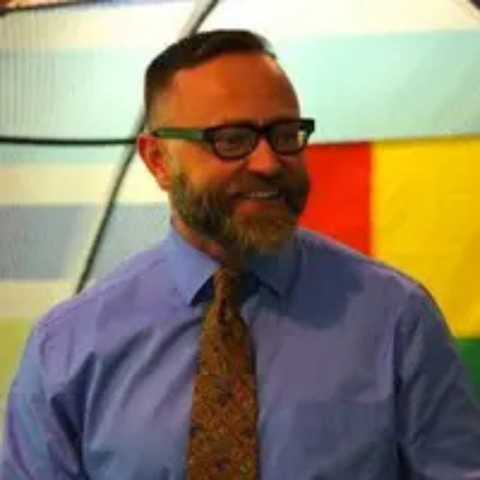
Dieter Sumerauer
Associated Chief Health Information Officer | Rady Children’s